The morning after our dinner at Samboon Dee, and I'm still smarting from being hoodwinked by that taxi driver into paying more for dinner than I ever should have in Bangkok, and at a restaurant I would in other circumstances have crossed the street to avoid. “Right, this morning we're definitely going shopping at
MBK Centre: no detours, no changes of plan, and NO taxis!”
There are many, many places for shopping shopping here, but MBK has taken centre stage in our consciousness; the guidebook says that everyone goes there and this is backed up by most taxi drivers' opening gambit: “You want go MBK?” I'm in the market for a new digital camera, so it also helped that I knew MBK has its share of “gadget shops”. We've decided to boycott the Bangkok taxi service this morning to punish them for last night, so instead we book ourselves a place on the hotel's hourly free shuttle to the nearest Skytrain station.
The shuttle is an old but thankfully air-conditioned minibus and we join three other people on the 1 mile, 30 minute journey to the Skytrain which, being a monorail, runs above street level and is therefore reached by climbing stairs to the station. It takes us a few minutes to work out which of the two lines we are on, which station we're at, and which one we need to go to for the MBK Centre, but we're soon on the platform, clutching our machine-vended tickets, and the train appears almost immediately. Our clean, air-conditioned train ride is brief – only three stops to the Siam Centre then walk the rest of the way. The correct route would have been to change lines at Siam Centre and take a second train one stop to the National Stadium station, which is right outside MBK, but I decided against that because I wanted to spend more time walking and taking in the atmosphere of street life. Come to think of it I didn't even enquire whether the rest of the family felt the same way, I just said, “This way” and they duly followed. As it turned out, going on to the next train stop would have saved us quite a bit of time and shoe leather, so I guess we should have discussed it at least, but I was on a mission to find the place “my way” and that was that; I do feel sorry for my family sometimes!
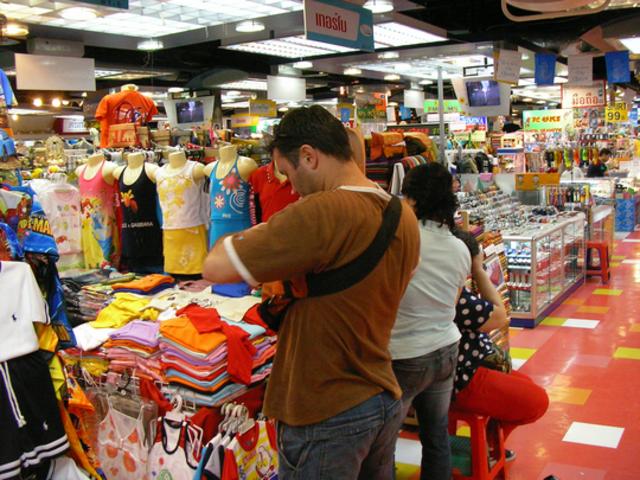
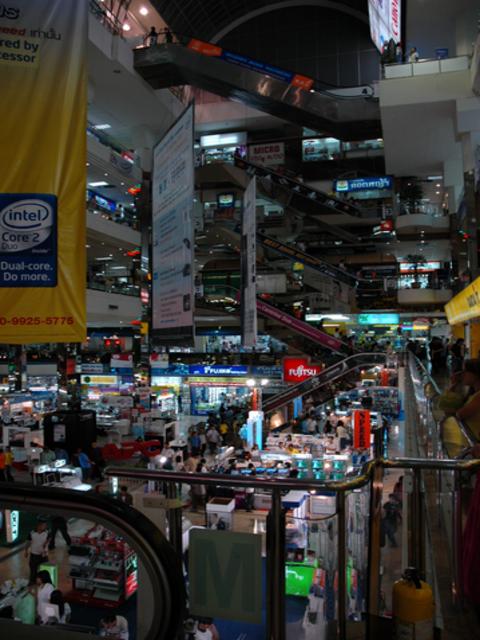
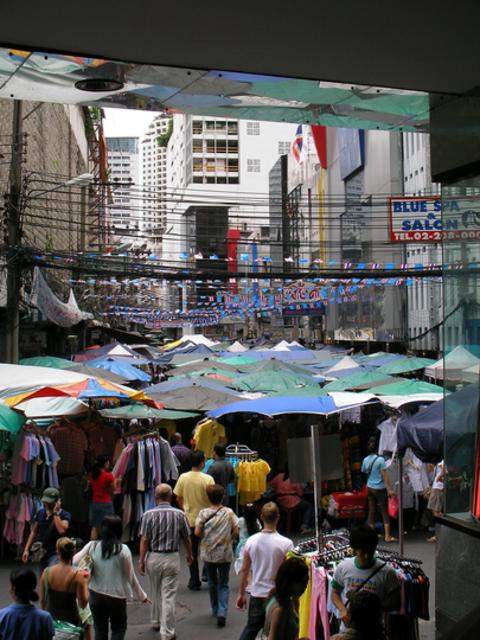
MBK is either a large shopping mall that was once invaded by an occupying army of market traders, or it's a purpose-built eight-floor indoor market that has been infiltrated by a few “proper” shops. Either way it's a fascinating hybrid where independent market stalls compete with retail chains for your attention, and your hard-earned cash. I was taken aback by the sheer scale of it: eight floors (and they're very large floors!), each one kind of themed.
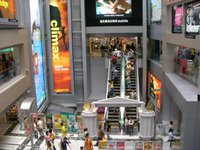 MBK in full swing
One floor is all clothing and souvenir market, another is full of music and DVD shops. One houses the food court (Yes mr. taxi driver – MBK IS also good for eating eating!), another is full of hairdressers and massage parlours, and yet another (my favourite), electronics. These are joined by chains of criss-crossing escalators all grouped together in a vast central atrium, so while you're ascending or descending to the next level you can see everyone else travelling to every other floor, with a big basement-to-glass roof hole in the middle. Imagine a giant 3D game of snakes 'n' ladders and you get the picture.
First order of business, new digital camera! There are loads of camera shops in MBK but we only needed to look at three. The first was a market stall and the price was good but, as the second shop (Sunny Camera) explained, the market stall sells grey imports that don't come with an international guarantee. Their price (for the genuine article) was higher, so I went to a third shop for a ... erm... third opinion.
There's a great catchphrase in Bangkok that you hear regularly in a sales situation when the seller doesn't have quite what the buyer wants to buy, but he REALLY wants the buyer to buy what he has. And that phrase is, “Same same, but different.” They don't have what you want but they don't want to put you off by introducing a negative atmosphere into the negotiation, so saying, “No” is out. Instead they want you to believe that what they have is the same (or same same) as what you came in for, only of course it isn't, so in order to remain honest the, “...but different” has to be tagged on to the end.
The third shop didn't have the Nikon D70S that I was looking for, so they tried instead to sell me a Canon EOS 350d saying – altogether now - , “Same same, but different!”
 My new toy :-)
 Same same, but different
I went back to Sunny Camera and paid the slightly higher price for a Nikon D70S plus two zoom lenses, but got a full international guarantee and a VAT Refund form so I could claim 7% back at the airport at the end of the holiday. Even so, the camera was still around £150 cheaper than in either Saudi or UK, so... bargain! The pictures you will see from the next post onwards will have been taken with the new love of my life, my D70S :-)
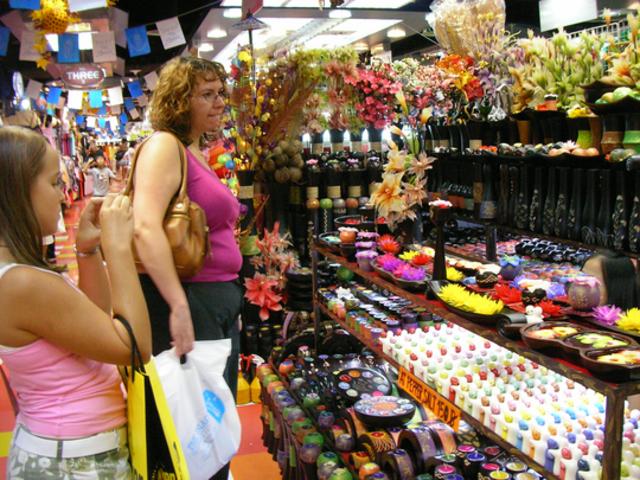
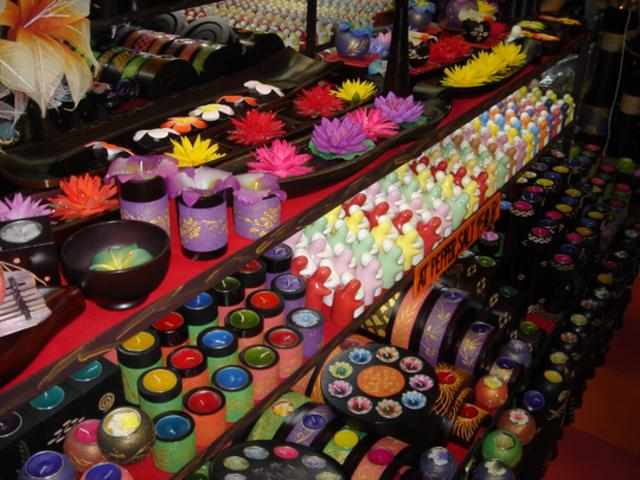
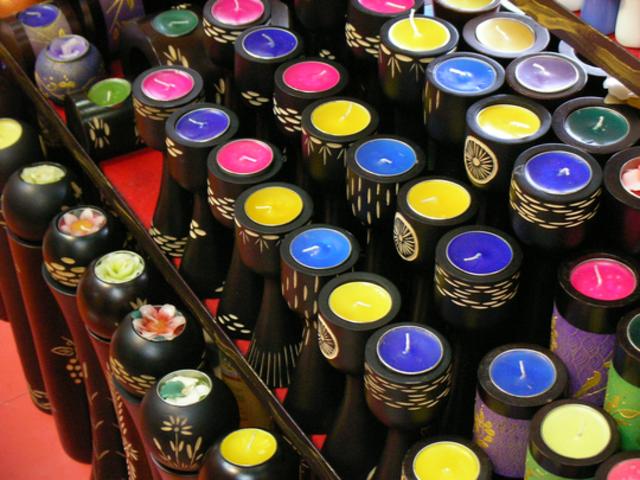
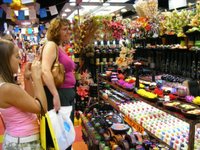
Next we went to the market area on Level 3; lane after lane of tightly packed, fluorescent-lit, brightly coloured stalls selling everything from T-shirts to chopsticks.
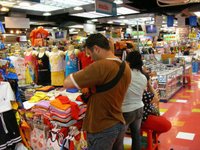
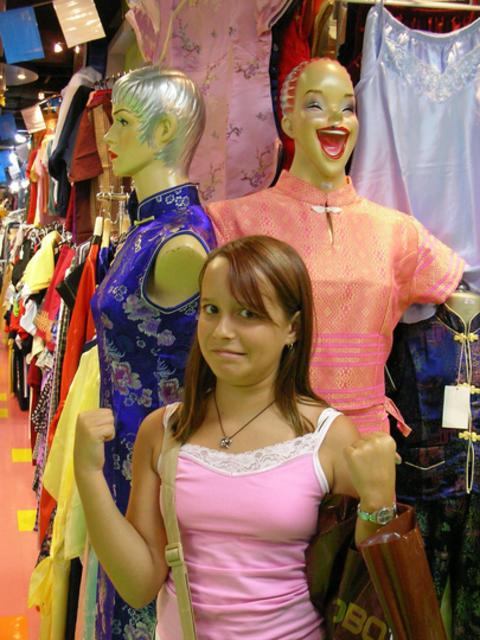
 Abigail with two new friends
They even had T-shirts with “SAME SAME” written on the front and “BUT DIFFERENT” on the back; so of course I bought one.

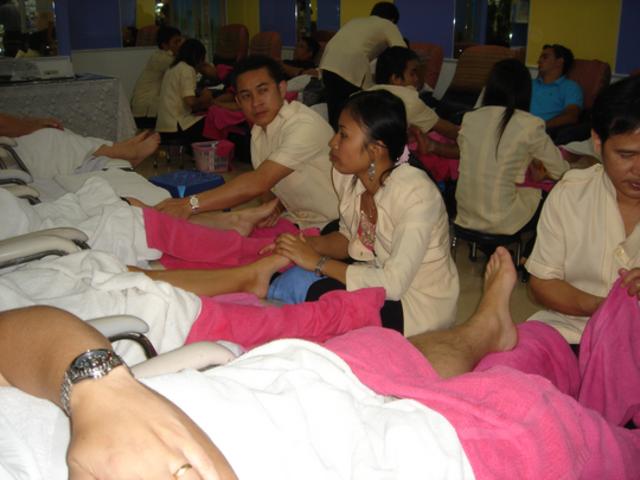
After an hour or so in this area we were feeling a little tired, with aching feet. We went down to Level 2 found one of several massage parlours, each with about twenty masseurs all in uniform, giving shoulder and foot massages en masse to a similar number of customers, all in full view of passers-by. Our aching feet were screaming for some relief by now so I negotiated a special price of 1000 Baht for all four of us to get a foot massage together (1000 Baht is about £15, for which we got four foot massages lasting a full hour). So we went in and lay down on beds, and so became part of the show, watched by the passing shoppers.
 Aaahh... that's better!
A Thai foot massage is a pleasant though sometimes uncomfortable experience. They include reflexology techniques designed to treat the whole body, which means they finish off with a shoulder/head massage to balance you out (good), but also go to work on the ends of your toes with a sharp stick (bad).
 Ouch! Watch what you're doing with that stick!
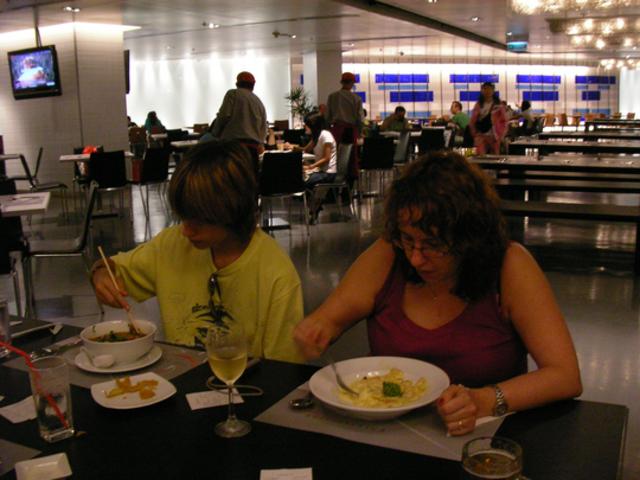
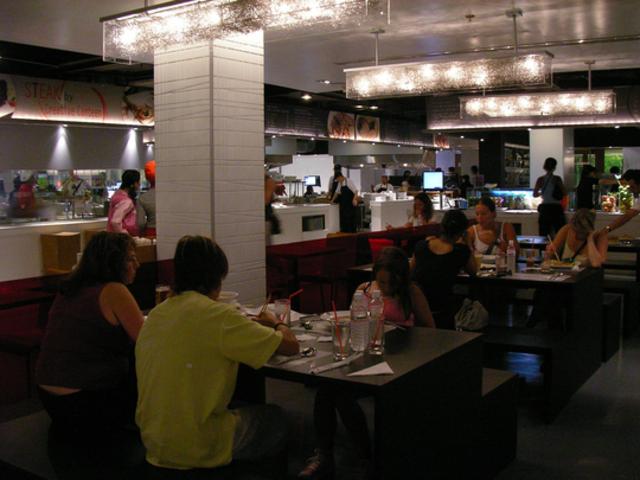
Suitably refreshed foot-wise it was then time for eating eating which, contrary to local taxi driver advice, IS possible in MBK at any time. Lots of food choices as usual, but we chose The Fifth, a designer food court on Level 5 where you can eat any kind of Asian & European food while listening to a mix of Asian pop and sophisticated fusion music.
 Eating eating at The Fifth
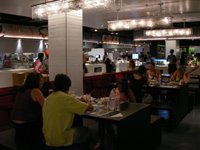
After an excellent (and good value) lunch it was back to the hotel to freshen up in time for our next evening jaunt.
I wanted to get a couple of accessories for the new camera, so while Karen and Abigail were getting ready Elliot and I nipped out to another nearby shopping marvel:
Pantip Plaza.
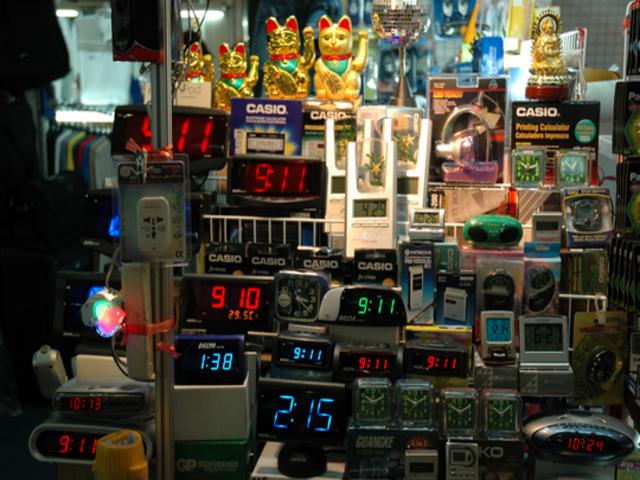
 So many gadgets, so little time!
This time only five levels and on a smaller scale from MBK, but ALL electronics stores. Everything from cameras to PCs, video games, and every kind of pirate software you could want.
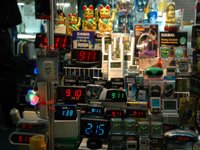
Yet again an amazing place that I wished I'd had more time to explore. I did, of course, have enough time in Pantip Plaza to find my new camera at a lower price! >:0

 A girl with hand-made flower garlands for sale and a tramp sharing a piece of pavement (taken from a taxi while waiting at yet another red traffic light).
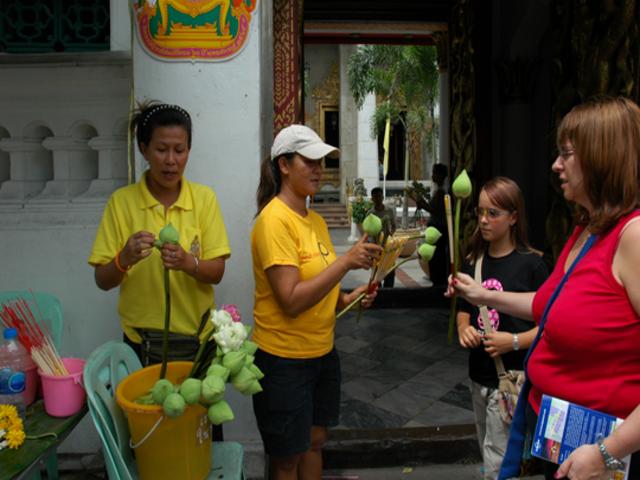 More flower sellers, this time outside a Buddhist temple. You buy a flower and some josticks from them, then present them in the temple as an offering.
 In addition to the many beautiful temples in Bangkok (more in next posting), there are also small shrines throughout the city where people stop to pray.
 Another woman presenting offerings at a shrine. Note that most of the people are wearing yellow shirts. These are special commemorative shirts to honour King Rama IX's 60th anniversary on the throne.
 Meet Eddie: our guide on the temple tour (story coming soon). Boy, he loves to talk!
 A Buddhist monk, teaching
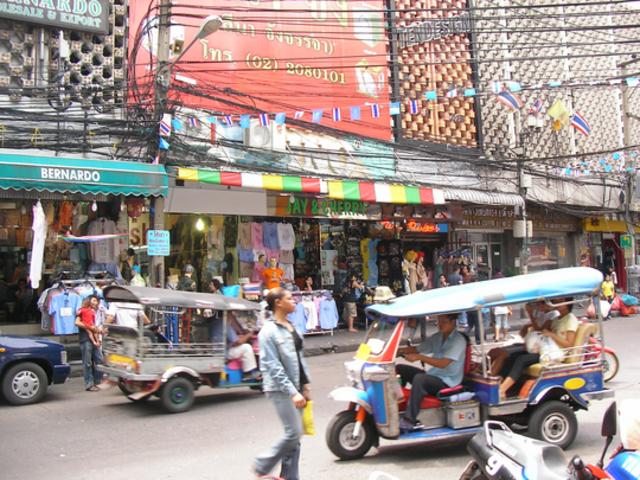
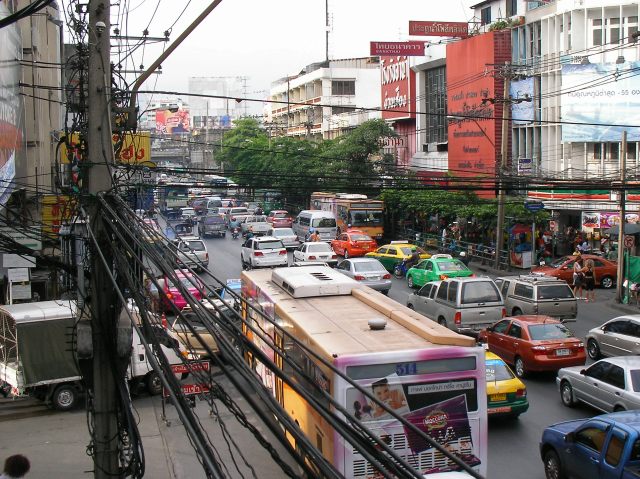
 Another stationary taxi shot. Look closely and you'll see the woman riding pillion has a small baby in her arms!
 Vagrant or just a siesta? You decide (photo taken mid-morning on the bank of the river).
 "Street cuisine" at its finest.
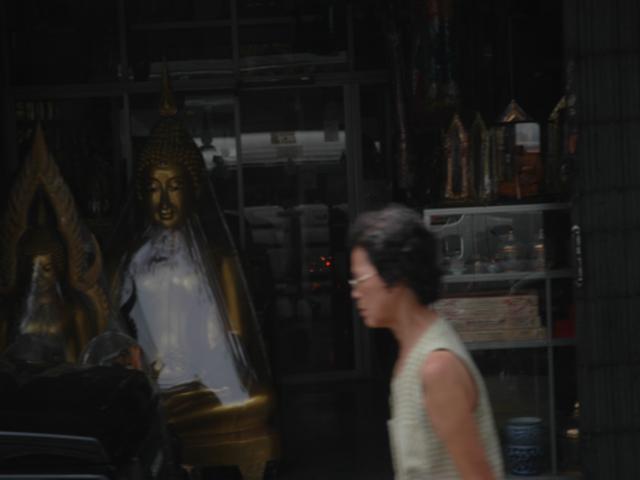 Woman on her way somewhere, watched over by a cellophane-sealed Buddha in a storefront
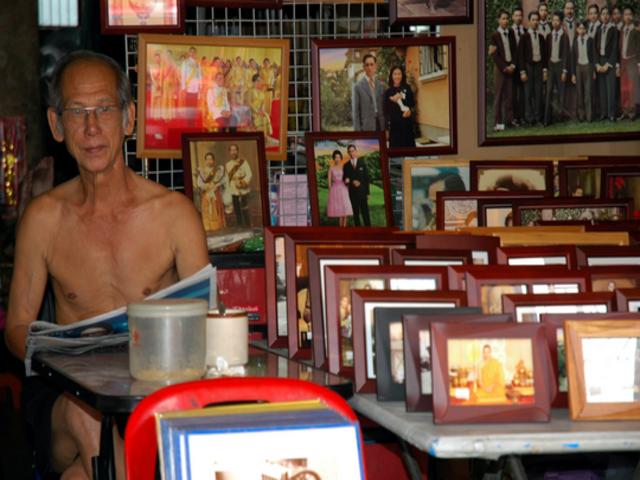 Man selling prints of the Royal Family past and present, but mostly past.
 I bought this print of a hand-coloured b/w photo of King Rama V and his sons in exchange for the previous photo.
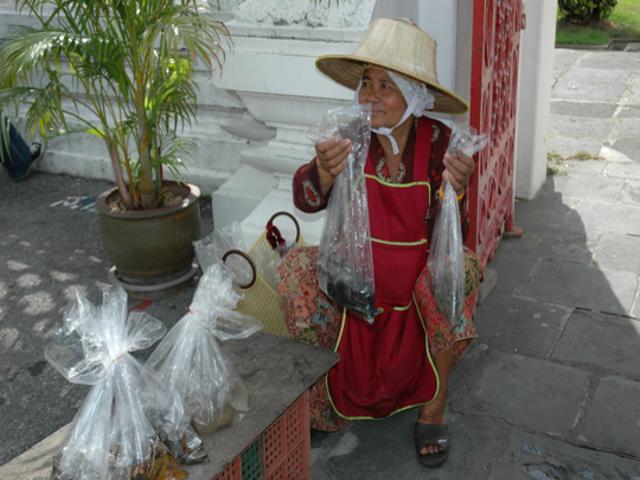 This woman was positioned at the entrance to a temple and was selling plastic bags full of live fish and toads. We didn't buy any.
 A blind busker on the way to MBK, playing a home-made stringed instrument. I wish I could remember how it sounded, but I gave him some money for the photo anyway. Note the judicious use of the omni-present plastic garden furniture.
 ...what working at MBK does to you.